Day: 20 September 2016

Macbeth: Act 1, Scene ii: Homework

“Sergeant
Uncertainty it stood;
As two low energy swimmers, that do hold tight together
And they are having difficulty breathing (two opposing fighters too tired to even fight each other).
The merciless (with no mercy as in killing everyone) Macdonwald–
Worthy to be a rebel(he is a traitor), for to that
The multiplying villanies of nature
Do swarm upon him(this metaphor is used to describe how bad he was
to the point were all the badness of nature is flying around him)
–from the western isles
Of kerns and gallowglasses is supplied(this means that that the
supplies are coming from the western isles);
And fortune, on his damned quarrel smiling
(this means that luck is on his side),
Show’d like a rebel’s whore: but all’s too weak:
For brave Macbeth(MacDonwald is showing of
but he is too week in Macbeth’s eyes)
–well he deserves that name( Macbeth deserves
being called brave)–
Disdaining fortune(Macbeth does not care about luck),
with his brandish’d steel(shows his sword),
Which smoked with bloody execution(Metaphor
showing that his sword is full of blood),
Like valour’s minion carved out his passage
Till he faced the slave(he walked pass every single
opposing soldier cutting them in half until he made
his way to the slave which is MacDonwald);
Which ne’er shook hands(they did not shake hands),
nor bade farewell to him(nor wished him a good fight),
Till he unseam’d him from the nave to the chaps,
And fix’d his head upon our battlements.(Macbeth stabs
MacDonwald in the stomach and cuts MacDonwald open
from his stomach to his neck. Than he chops his
head off and puts it in his open stomach”


Year 10 Lichen Lesson on Environmental Indicators

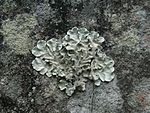
Lichens are Fungi, and are really interesting.The plant-like appearance of lichen hides their true identity. A lichen is not a single organism, but the result of a partnership (mutualistic symbiosis) between a fungus and an alga or cyanobacteria. Not just that, lichens are bio-indicators. Bio-indicators are living organisms that respond in an especially clear way to a change in the environment. The hardy lichens are useful bio-indicators for air pollution, especially sulfur dioxide pollution, since they derive their water and essential nutrients mainly from the atmosphere rather than from the soil. It also helps that they are able to react to air pollutants all year round. Compared with most physical/chemical monitors, they are inexpensive to use in evaluating air pollution. Lichens can also be used to measure toxic elemental pollutants and radioactive metals because they bind these substances in their fungal threads where they concentrate them over time. Environmental scientists can then evaluate this accumulation to determine the history of the local air.

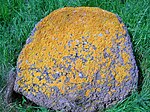
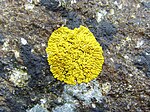
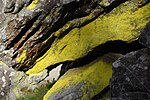
In a air polluted area, you will not find any lichens around the area. Special pigments, such as yellow usnic acid, give lichens a variety of colors, including reds, oranges, yellows, and browns, especially in exposed, dry habitats.

download

To stop air pollution I think we need to try and stop acid rain. To do that we need to stop releasing sulfur into the air. And if lichens do not grow up, it is an air polluted environment. Having a lot a green area will be great, (a green area is where there i slots and lots of trees, grass. etc) because having trees is really helpful in reducing the amount of carbon dioxide (CO2) and increase the amount of oxygen (O2). Having this area far far away from any factories will be really great, because then we can reduce the amount of toxic gasses in the air. Box Hill in Surrey is a free application planning.  And because it has the features that have been stated. The question is, do lichens grow?

The Green Elfcup which stains wood a typical blue green found at Box Hill, Surrey - Stock Image
The answer is yes. This picture of a  lichen is from a website and here is the link http://www.alamy.com/stock-photo/fungi-box-hill-surrey.html, if we can have the same features in area it will be less if not at all polluted. And to know if it is working we should have lichens growing.

Lichens can also indicate if it rains in a specific area or not. In the absence of special pigments, lichens are usually bright green to olive gray when wet, gray or grayish-green to brown when dry.