Page 4 of 6

Act 1 Scene 7

Macbeth:

Besides, this Duncan
Hath borne his faculties so meek, hath been
So clear in his great office, that his virtues
Will plead like angels, trumpet-tongued, against
The deep damnation of his taking-off;

Besides, Duncan has born his faculties so gentle, has been so clear in his great office, that his virtues will be emotionally appealed like angles. And the angles are playing trumpets against the injustice of the killing of him.

Macbeth:

But in these cases
We still have judgment here, that we but teach
Bloody instructions, which, being taught, return
To plague th’ inventor:
But in this world there is still punishments for those who commit crimes like this. And this will teach bloody instructions (violence), which, when teach this violence, will come back as violence to us teachers.

Macbeth Act 1 Scene 5

The scene starts with Lady Macbeth reading Macbeth’s letter. She felt as if her husband is not evil enough to be that much ambitious. And this scene is all about showing how much evil is Lady Macbeth.

LADY MACBETH

     O, never
Shall sun that morrow see!
Your face, my thane, is as a book where men
May read strange matters. To beguile the time,
Look like the time. Bear welcome in your eye,
Your hand, your tongue. Look like th’ innocent flower,
But be the serpent under ’t. He that’s coming
Must be provided for; and you shall put
This night’s great business into my dispatch,
Which shall to all our nights and days to come
Give solely sovereign sway and masterdom.

SparkNotes Editors. “SparkNote on Macbeth.” SparkNotes.com. SparkNotes LLC. 2002. Web. 27 Sept. 2016.

Macbeth Act 1 Scene 4

The king ask if the execution was done to the old thane of Cawdor. He was told that the execution was done and that he died a noble death confessing about all the crimes that he have done. The king Give Macbeth the Thane Of Cawdor and he shows his respect to the king Duncan. However the king gives his son Malcolm the prince of Cumberland so Macbeth starting planning something for Malcolm. But he does not want the king to know about his dark and deep desires.

MACBETH

(aside) The prince of Cumberland! That is a step
On which I must fall down, or else o’erleap,
For in my way it lies. Stars, hide your fires;
Let not light see my black and deep desires.
The eye wink at the hand, yet let that be
Which the eye fears, when it is done, to see.
At the king’s palace, Duncan hears reports of Cawdor’s execution from his son Malcolm, who says that Cawdor died nobly, confessing all of his crimes. Macbeth knows that Duncan’s son is know the prince of Cumberland. So Macbeth has some dark a deep desires against Malcolm. And he wants to keep it away.from the King.
SparkNotes Editors. “SparkNote on Macbeth.” SparkNotes.com. SparkNotes LLC. 2002. Web. 27 Sept. 2016.

Macbeth Act 1 Scene 4

At the king’s palace, Duncan hears reports of Cawdor’s execution from his son Malcolm, who says that Cawdor died nobly, confessing all of his crimes. Macbeth knows that Duncan’s son is know the prince of Cumberland. So Macbeth has some dark a deep desires against Malcolm. And he wants to keep it away from the King.

MACBETH

(aside) The prince of Cumberland! That is a step
On which I must fall down, or else o’erleap,
For in my way it lies. Stars, hide your fires;
Let not light see my black and deep desires.
The eye wink at the hand, yet let that be
Which the eye fears, when it is done, to see.

Macbeth Act 1 Scene 3

The witches tell Macbeth that the king has made him thane of Cawdor, as well as hailing him as a future King, as the former thane is to be executed for treason. Macbeth, amazed that the witches’ prophecy has come true, And he clearly wants to become the King, asks Banquo if he hopes his children will be kings.

MACBETH

(aside)      Two truths are told,
As happy prologues to the swelling act
Of the imperial theme. (to ROSS and ANGUS) I thank you, gentlemen.
(aside) This supernatural soliciting
Cannot be ill, cannot be good. If ill,
Why hath it given me earnest of success,
Commencing in a truth? I am thane of Cawdor.
If good, why do I yield to that suggestion
Whose horrid image doth unfix my hair
And make my seated heart knock at my ribs,
Against the use of nature? Present fears
Are less than horrible imaginings.

Macbeth Act 1 Scene 2

In Act 1 Scene 2, King Duncan gets to know about the triumph of Macbeth over the Merciless MacDonwald. The Thane of Cawdor was a traitor so the king order his execution and for Macbeth to become the new Thane of Cawdor.

DUNCAN
No more that thane of Cawdor shall deceive
Our bosom interest: go pronounce his present death,
And with his former title greet Macbeth.


Analysing MacBeth’s Speech.

MACB.

Aside.

The Prince of Cumberland! That is a step
On which I must fall down, or else o’erleap,
For in my way it lies. Stars, hide your fires,
Let not light see my black and deep desires;
The eye wink at the hand; yet let that be
Which the eye fears, when it is done, to see.

Macbeth wants to become the Prince of Cumberland,
he wants to get rid of Duncan’s son, because he knows
that the Prince of Cumberland will become the King.
However, Macbeth does not want the King to know about his desires.
Language Device

Shakespeare uses an iambic rhythmic style all cross the speech of Macbeth, and I think Shakespeare use the iambic rhythm because he wants to show he audience that Macbeth is in control of what he says. And the fact that Macbeth is saying this to the audience makes it dramatic irony. Dramatic irony is when the audience knows something that the King does not know.

Lichens: Year Ten Week 4

Science is about studying genes and organisms, and because some organisms being so small that they can be seen only after a magnification of x2000 – x25000 which can be achieved only by a microscope. Therefore we can say that cells are too small to be seen with naked eyes. Talking about genes, genes are even smaller than cells so microscope is very essential to do a study about genes.

Magnification is enlarging the physical appearance or image of something. And it can be calculated as,Equation: magnification =frac{measured~size}{actual~size}

Magnification makes objects look bigger, while resolution increases the amount of detail that can be seen on an object. Microscopes are used to both magnify objects and resolve them

There are two types of microscope; A Light ad electron microscope.
Image result for What are the advantages and disadvantages of using a light and electron microscopeThe advantages of a light microscope are:
1. It uses light instead of electrons, (because light is easier to produce than electrons)
2.It uses glass lenses witch are easier to get and work with than electromagnet lenses.
3. It can use living and non-living specimen.
4.It give a coloured image.
Disadvantages of a light microscope:
1. It has a low resolution.
2. It has a large length of radiation used.

The advantages of a electron microscope:
1.Low wavelength of radiation used.
2. It has a minimum resolution.
Disadvantages of a electron microscope.
1. It uses a electrons instead of light, (because light is easier to produce than electrons)
2.It uses electromagnet lenses witch are harder to get and work with than glass lenses.
3. It cannot use living specimen.
4.It give a black and white image.

The maximum magnification of light microscopes is usually ×1500
Using the formula image size= specimen size x magnification. So if the specimen is 3mm²
Image size=3mm² x1500= 4500mm²

Eukaryotic cells contain membrane-bound organelles, including a nucleus. Eukaryotes can be single-celled or multi-celled, such as human beings, plants, fungi, and insects. Bacteria are an example of prokaryotes. Prokaryotic cells do not contain a nucleus or any other membrane-bound organelle.

Image result for Compare prokaryotic and eukaryotic cells.
Cell specialisation is the process by which cells change their shapes to carry out a particular task. It happens in multicellular organisms.
Example of specialised animal cells :
White blood Cells: Change their shape to engulf bacteria.
Image result for white blood cells
Nerve Cells: Contains a long fire to conduct impulses.
Image result for specialised cells nerve cell
Examples of specialised plant cells:
Guard Cells: bean-shaped cells with a pore in between to allow gas exchange.
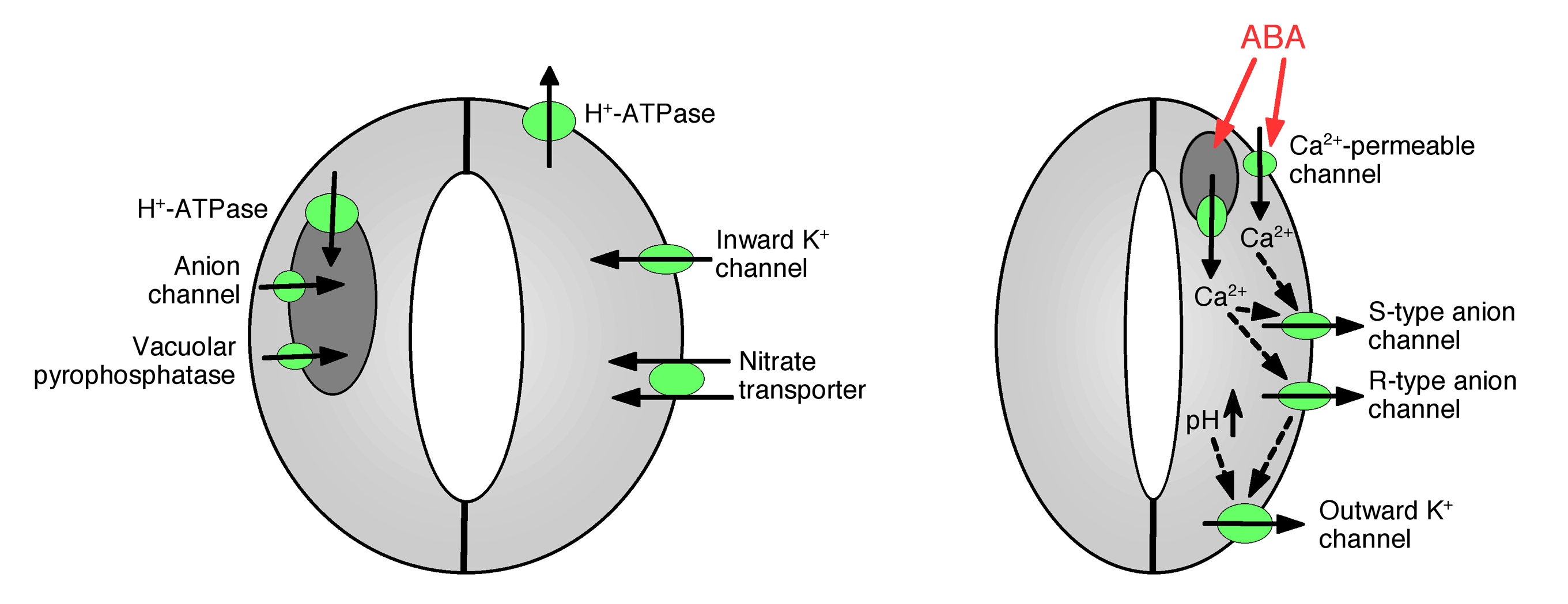
Image result for specialised plant guard cells
Palisade Cells: elongated cells with many chloroplasts to carry out photosynthesis.
Image result for specialised plant palisade cells
Root Hair Cells: are found in the roots of plants. Their role is to absorb water and minerals in the soil.
Image result for are root hair cells specialised cells

Generalised cells are round or spherical in shape and perform basic life functions. Cheek cells are generalised cells. They are flat, basically round, and protect the inside lining of the mouth. And they are cells that are not specialised cells. However, generalised plant cells are an imaginary, average of all plant cells.
Image result for generalized cells structure
Writing about specialised cells these are their functions
Image result for Describe the adaptations of specialised plant cells.

Macbeth: Act 1, Scene ii: Homework

“Sergeant
Uncertainty it stood;
As two low energy swimmers, that do hold tight together
And they are having difficulty breathing (two opposing fighters too tired to even fight each other).
The merciless (with no mercy as in killing everyone) Macdonwald–
Worthy to be a rebel(he is a traitor), for to that
The multiplying villanies of nature
Do swarm upon him(this metaphor is used to describe how bad he was
to the point were all the badness of nature is flying around him)
–from the western isles
Of kerns and gallowglasses is supplied(this means that that the
supplies are coming from the western isles);
And fortune, on his damned quarrel smiling
(this means that luck is on his side),
Show’d like a rebel’s whore: but all’s too weak:
For brave Macbeth(MacDonwald is showing of
but he is too week in Macbeth’s eyes)
–well he deserves that name( Macbeth deserves
being called brave)–
Disdaining fortune(Macbeth does not care about luck),
with his brandish’d steel(shows his sword),
Which smoked with bloody execution(Metaphor
showing that his sword is full of blood),
Like valour’s minion carved out his passage
Till he faced the slave(he walked pass every single
opposing soldier cutting them in half until he made
his way to the slave which is MacDonwald);
Which ne’er shook hands(they did not shake hands),
nor bade farewell to him(nor wished him a good fight),
Till he unseam’d him from the nave to the chaps,
And fix’d his head upon our battlements.(Macbeth stabs
MacDonwald in the stomach and cuts MacDonwald open
from his stomach to his neck. Than he chops his
head off and puts it in his open stomach”